
The future is created, not predicted. This is true of civilization – and of you.
Talking Big Ideas.
“Build a new model that makes the existing model obsolete.”
~ Buckminster Fuller
Big Cheers to Mercatus: Our coach, Kim Hemsley, was honored to lead their Emerging Scholars in a workshop series culminating in a storytelling competition for the whole staff:

***
The world changed on December 17.
Two high school dropouts were standing together on a beach. One spent years bedridden with depression and was missing his front teeth.
The young men were partners. Eager to make money, they started a little bike shop to profit from the cycling craze sweeping the country. The knowledge they gained from bikes made them wonder if they could build something that had never been built. A device that would realize the dreams of humans since the dawn of time.
A flying machine that people could ride through the air!
The dropouts knew most experts believed human flight was a fantasy. Lord Kelvin, among the most revered scientists of their time, had recently written that “heavier-than-air flying machines are impossible.”
I like to imagine Lord Kelvin picturing the iconic bicycle scene from E.T. as he wrote his prediction:
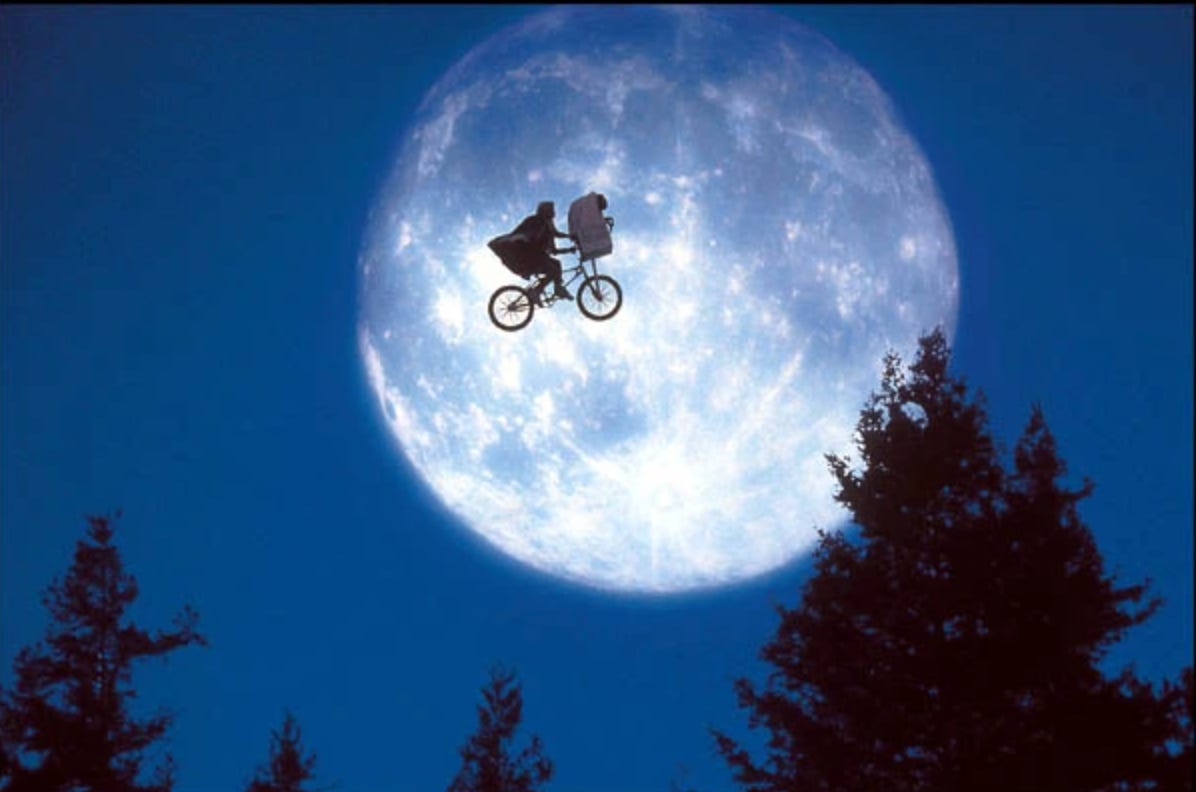
“Heavier-than-air flying machines are impossible.”
~ Lord Kelvin
If I were there, I assuredly would have sided with Lord Kelvin. Of course heavier-than-air flying machines are impossible. You can’t ride your bike into the sky in real life – that’s why we immerse ourselves in fantasy worlds where the laws of physics don’t apply.
The dropouts were aware that most people thought this way. They also knew several celebrated and well-funded engineers were working hard to build their own flying machines, with no success.
The young men were convinced they stumbled upon a secret that the world’s top scientists and engineers all missed, a secret they uncovered by knowing how people ride bicycles. They built their flying machine differently from any other. It moved and steered like a bike.
And, eventually, it worked!
Their first flight, on a beach in North Carolina, was captured in a photograph that would go viral worldwide.
Against seemingly impossible odds – who’d think you could ride a machine magically into the air! – two amateur bicycle makers with no formal education or financial support ushered in the era of human flight.
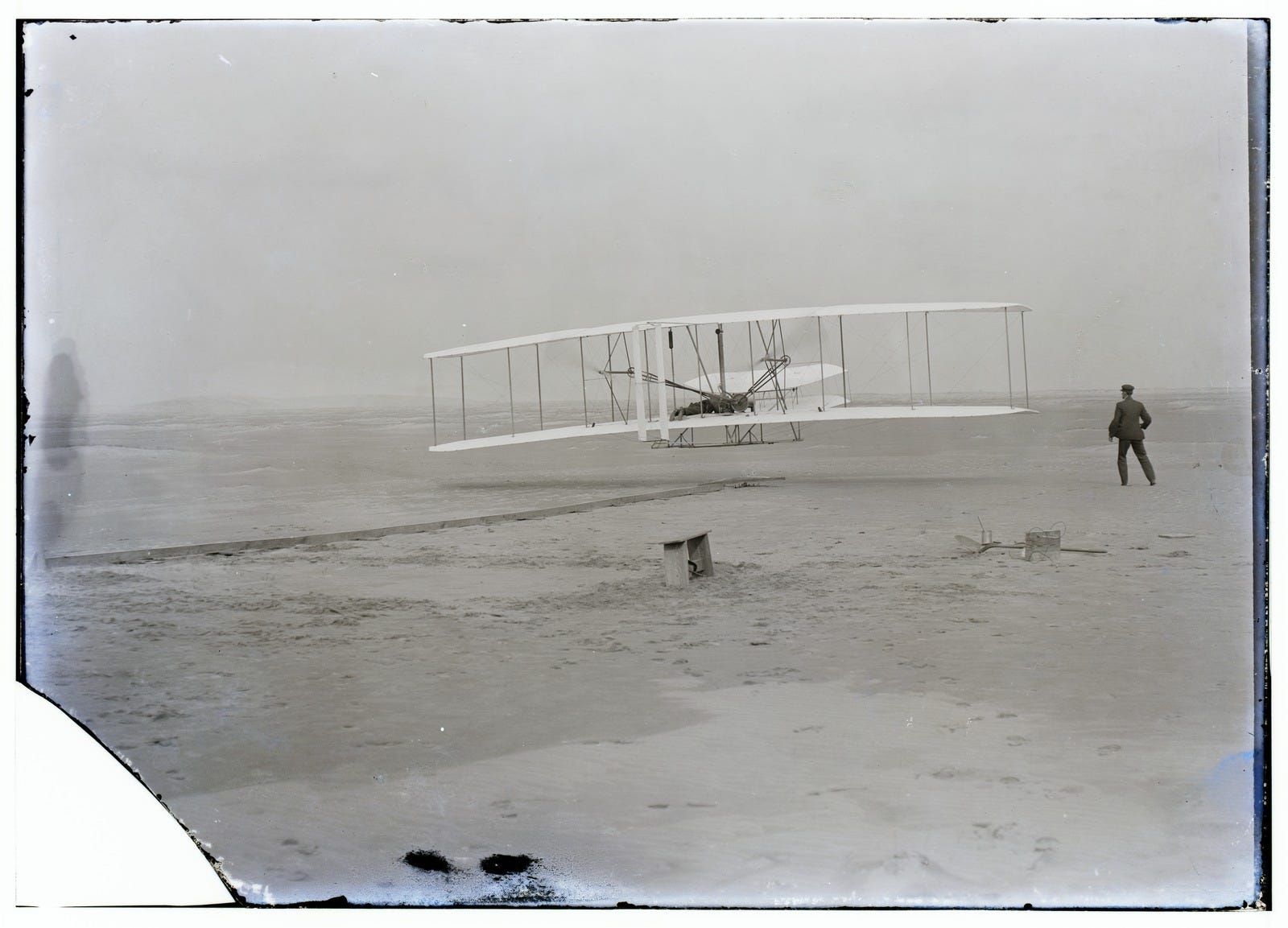
They were the brothers Orville and Wilbur Wright. For years, they heard that “it can’t be done.” And, for years, the naysayers were right. From the beginning of time until 122 years ago today, heavier-than-air flying machines were a fantasy.
And then, on December 17th, 1903, they became a reality. The world changed.
You’ve likely ridden in heavier-than-air flying machines many times. Today they’re everywhere:
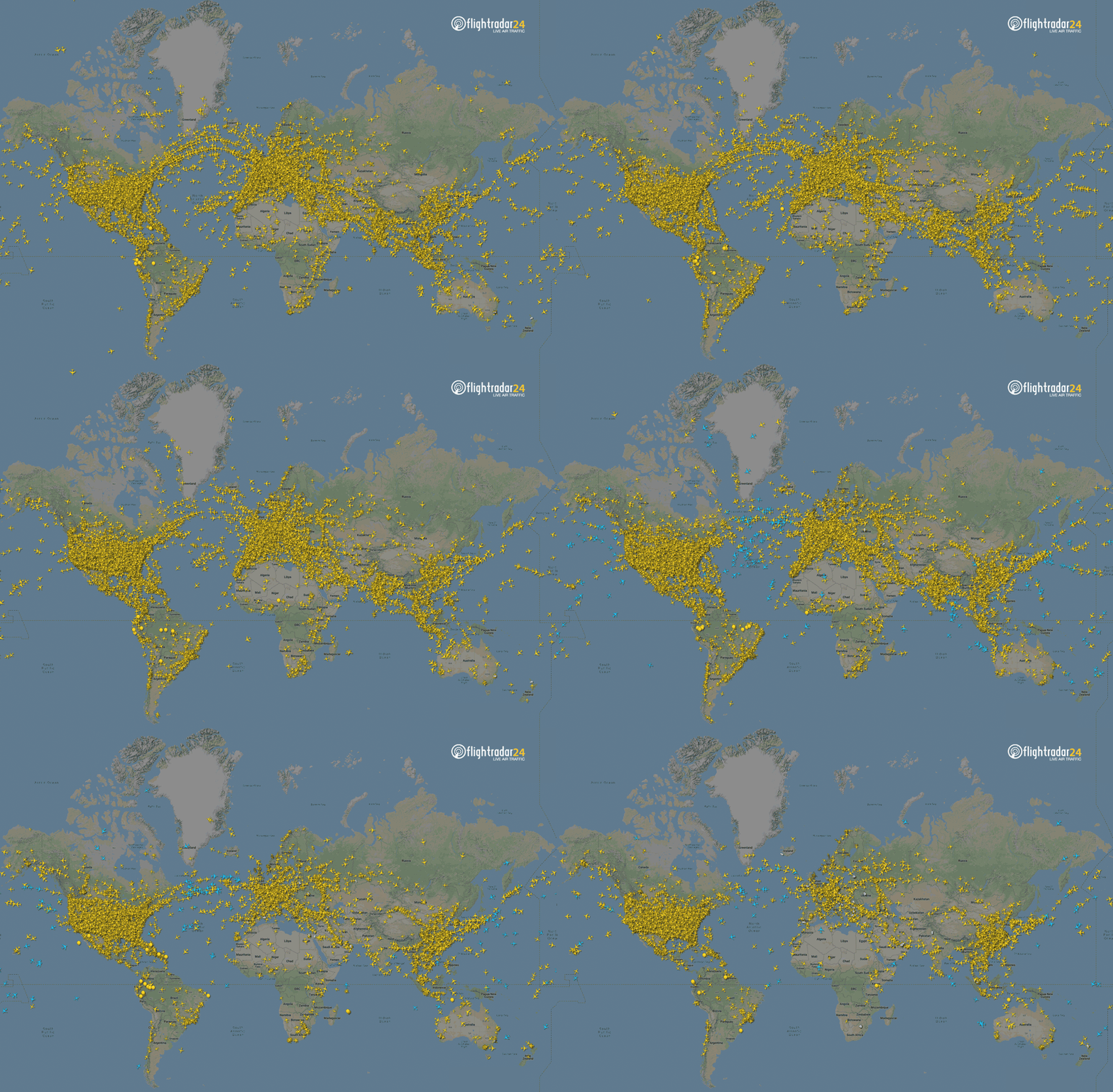
And that’s just airplanes at one particular moment. We also have helicopters, rockets, drones, jetpacks, and countless toys.
Two months before the Wright brothers’ first flight, the New York Times editorialized that humans “won’t fly for a million years” as it would require “the combined and continuous efforts of mathematics and mechanics for one million to ten million years.”

Human flight was simply the latest in a rich history of respected experts, reasoning from existing constraints, driving home the idea that “this is currently an impossible fantasy.”
The Boston Post once editorialized that “it is impossible to transmit the voice over wires.” And when it happened, an internal memo at Western Union clarified that “this ‘telephone’ has too many shortcomings to be seriously considered as a practical form of communication.”
The head of 20th Century-Fox was convinced TV “won’t be able to hold on to any market it captures after the first six months. People will soon get tired of staring at a plywood box every night.”
Less than two decades after their botched prediction on flying machines, the New York Times wrote that “a rocket will never be able to leave the Earth’s atmosphere.”
The truth is, many of today’s ‘impossible dreams’ will be the realities of tomorrow.
My favorite is Dr. Dionysus Lardner from University College London, who believed “Men might as well project a voyage to the Moon as an attempt to employ steam navigation against the stormy North Atlantic Ocean.”
Steamships would shortly cross the Atlantic – and in the following century, we succeeded in that voyage to the moon.
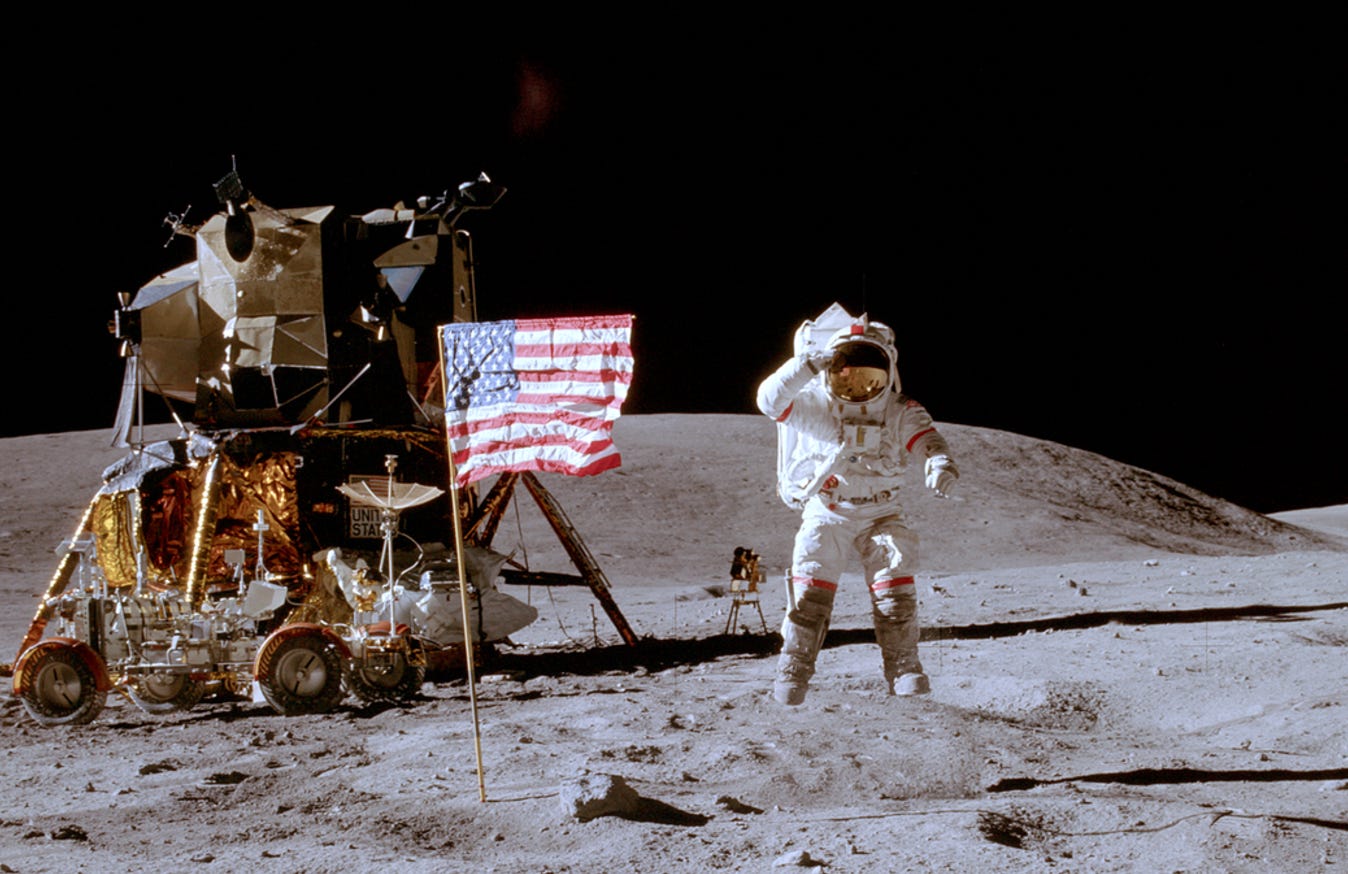
Predicting the future is hard.
The philosopher Bertrand Russell had a famous analogy for this. Imagine turkeys on the family farm. They are well-fed and happy, leading idyllic lives – and then they get slaughtered for holiday dinners.
The turkeys thought life was perfect! And then suddenly everything changed. The turkeys reasoned correctly – until the rules of the game shifted. Russell’s point is that the past does not always predict the future, and it is often hard to see even the change about to occur.

I wrote about Paul Ehrlich, who achieved global fame in predicting hundreds of millions of people would starve to death by 1990, and “all important animal life in the sea” would be dead.
Cynical doomers are popular, but they systematically underestimate human problem-solving capacity in their predictions – both because predictions are hard and because they fail to understand a core aspect of our species: we innovate.
And innovation often outpaces pessimistic forecasts.
During the depths of the Great Depression, how many people saw that one of humanity’s greatest triumphs was rapidly unfolding? After remaining catastrophically high throughout history, maternal mortality suddenly collapsed, driven by breakthroughs in medical discovery, institutional learning, and the spread of better ideas.

Our ideas are acts of creation. We can never see the future with total clarity because our ideas constantly create new paths for the future to take.
And because our ideas combine in open-ended, ever-expanding ways, we have far more ideas to be discovered and possible paths ahead than any forecast can capture – ways to innovate, solve problems, and drive civilization forward.
Consider the Enlightenment.
Its real breakthrough was not wealth, optimism, or even technology, but a new way of thinking: systematic error correction. Ideas ceased to be sacred truths and became testable, criticizable, and discardable. Better ideas could spread.
Knowledge became cumulative, triggering an explosion of scientific, economic, and moral innovation that no expert in 1800 could have predicted, because the future was being rapidly created through discovery rather than extrapolated from the past.
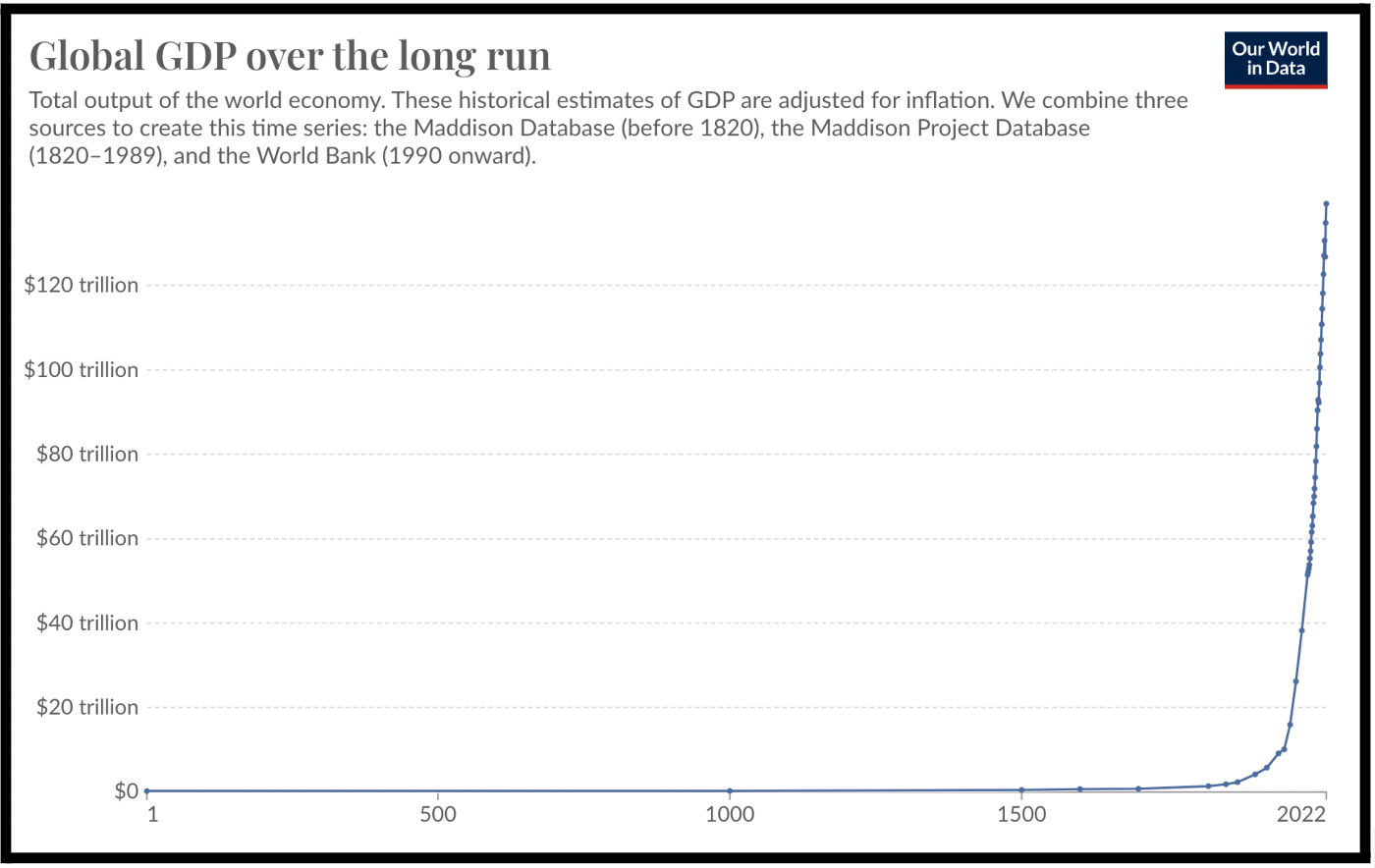
How many people in 1800 guessed that prosperity was about to go parabolic?
This same truth about innovation applies to individuals. Ben Klutsey, the executive director of the Mercatus Center, is an award-winning public speaker. He captivates audiences worldwide, and recently starred in a beautiful documentary called Undivide Us, where he traveled the country inspiring everyday Americans to transform animosity into calm respect:
But as a child, Ben was so shy that he got bullied at school. He remained closed off for years, until a teacher finally broke through and encouraged him to speak up. Ben says that his world changed that day.
When will the world change for you?
This is the moment you realize that you are not imprisoned by who you were yesterday. You can rewrite the stories you tell yourself about yourself. You can create the future you want – a future shaped by your own agency and creative capacity.
You can experience the magic of transformation and the joy of confidently bringing your dreams to life.
You can build the reality of tomorrow.
Just as the Wright brothers did on this day in 1903.
# # #
I published an earlier version of this piece on 17 December 2024.